Corridor dossier · Marrakech
Marrakech, held for later
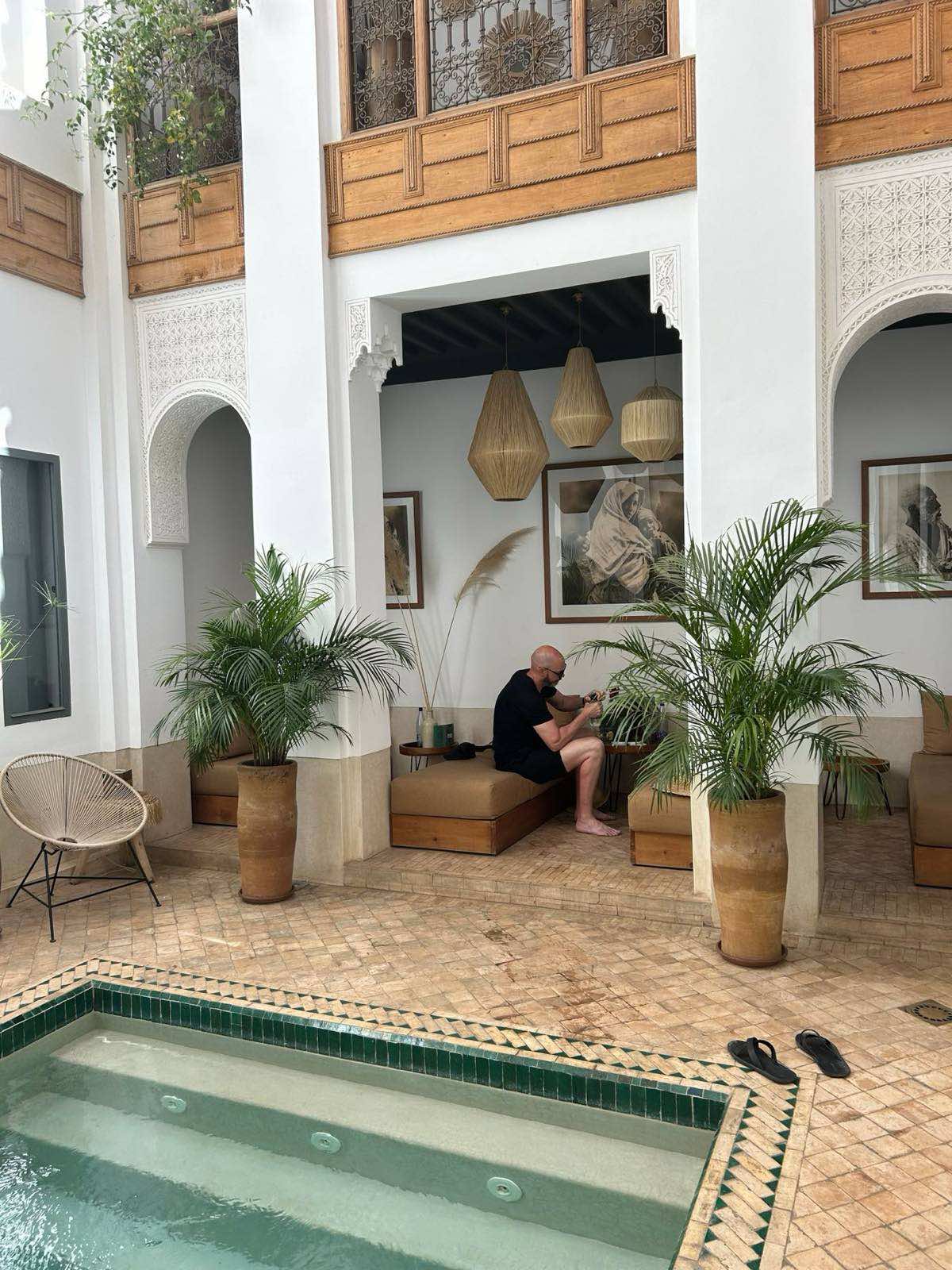
Marrakech is the corridor the office has read most deeply and not yet opened. The file is thick — where the city sleeps, where dinner becomes an occasion, which garden to keep for the last morning — and every page of it holds until a taste editor walks the medina in person. Nothing is arranged from a distance; that is the whole discipline.
The sleeping question is settled in outline. El Fenn’s roof terrace over the medina for the first hour of the evening; La Mamounia’s eight acres of garden for the long unhurried middle; the Royal Mansour’s craftsmanship for the households who want a palace that keeps its voice down.
Dinner divides three ways: Dar Yacout’s rooftop over the rooftops, Le Tobsil’s candlelit room a few alleys in, and NOMAD when the evening wants this century’s version — the flourless orange cake is already a standing note in the file. The garden is not a question at all: Majorelle in the early morning, the Saint Laurent museum beside it, and Villa Oasis by private request, which is the kind of sentence this office exists for.
But the office does not seat anyone in a room it has not stood in. The corridor opens when an editor has walked it — the riads checked against their photographs, the rooftops climbed, the souk timed at midday. Until then Marrakech stays exactly what it is here: held for later, and worth the holding.
Members may ask where the dossier stands; the office answers honestly, which today means — not yet.